Sales Compensation Software Benchmark | Compare 15+ sales compensation platforms (features, pricing, fit by company size...)
Download
- Incentive compensation management (ICM) is the end-to-end process for designing, calculating, and administering variable pay—using measurable outcomes like closed deals, renewals, and quota attainment to determine earnings.
- Traditional spreadsheet-based commission management breaks at scale because it creates manual errors, version-control chaos, stale data, and weak audit trails that fuel disputes and destroy trust.
- Modern ICM fixes this through automated integrations (CRM, billing/ERP, HR/payroll) and real-time calculation engines that handle complex rules like tiers, accelerators, splits, clawbacks, and deal-level modifiers.
- Real-time rep dashboards are a core advantage of ICM, giving sellers daily visibility into earnings progress, pipeline impact, and “what-if” scenarios—improving motivation, prioritization, and manager coaching.
- In 2026, leading ICM software must deliver deep integrations, no-code plan design with scenario modeling, ASC 606-ready compliance reporting, and multi-currency/multi-entity support to scale globally with strong financial controls.
Revenue-generating teams drive business growth, but compensating them fairly and accurately at scale is one of the most complex operational challenges modern companies face. When compensation plans break down—through manual errors, delayed payouts, or lack of transparency—you don't just lose trust. You lose your best performers.
Incentive compensation management (ICM) transforms how organizations design, calculate, and deliver variable pay. Modern commission automation eliminates spreadsheet chaos, provides real-time visibility to sales teams, and ensures compliance with financial regulations. This guide explores how ICM works, why traditional methods fail, and what separates leading solutions in 2026.
What Is Incentive Compensation Management?
Incentive compensation management (ICM) is the process of designing, implementing, calculating, and administering variable pay plans that reward revenue-generating employees—primarily sales teams—for achieving specific performance goals. Unlike base salary, which compensates for time worked, incentive compensation directly ties earnings to measurable outcomes like closed deals, renewals, or quota attainment.
Modern ICM encompasses the full lifecycle of sales compensation:
- Plan design: Structuring commission rates, accelerators, tiers, and SPIFFs aligned with business priorities
- Data integration: Connecting CRM, ERP, HR, and billing systems to centralize performance data
- Automated calculation: Processing complex commission logic at scale without manual intervention
- Real-time visibility: Providing sales reps with transparent dashboards showing earnings progress
- Compliance and reporting: Generating audit-ready records that satisfy ASC 606 and other regulations
- Continuous optimization: Analyzing plan effectiveness and adjusting structures based on performance data
Core Components of ICM
Effective incentive compensation management requires three foundational elements:
1. Strategic Plan Architecture
Commission structures must align sales behavior with company objectives. High-growth SaaS companies might weight new logo acquisition heavily, while mature businesses prioritize expansion revenue. Plan components include:
- Base commission rates (e.g., 10% of ACV)
- Accelerators for quota overachievement (e.g., 15% commission at 120% attainment)
- Tiered structures rewarding consistent performance
- Team-based incentives for collaborative selling
- SPIFFs (Sales Performance Incentive Funds) for time-bound initiatives
2. Technical Infrastructure
Modern ICM relies on sales commission software that integrates across the revenue tech stack. The system must:
- Pull opportunity data from Salesforce, HubSpot, or other CRMs
- Sync billing data from NetSuite, QuickBooks, or Stripe
- Apply complex crediting rules (split credits, weighted opportunities, clawbacks)
- Calculate commissions in real-time as deals progress through stages
- Generate detailed commission statements with full transaction transparency
3. Stakeholder Alignment
ICM sits at the intersection of RevOps, Finance, Sales Leadership, and individual contributors. Success requires:
- RevOps designing plans that drive desired selling behaviors
- Finance ensuring calculations meet revenue recognition standards
- Sales Managers coaching reps on how to maximize earnings
- Individual reps understanding exactly how their activities translate to compensation
ICM vs. Traditional Compensation Management
Traditional compensation management treats sales comp as a periodic finance function—typically calculated monthly in spreadsheets after the close of a period. This creates fundamental problems:
The shift from manual compensation management to modern ICM isn't just operational efficiency—it's strategic. Companies that automate commission calculations report 75-90% reduction in administrative time, 95% fewer calculation errors, and 40% improvement in sales team satisfaction with compensation processes.
Why Traditional Compensation Management Fails at Scale
What works for a 10-person sales team collapses under the weight of growth. As organizations scale beyond 50 sales reps, traditional manual compensation management creates cascading operational and strategic failures.
The Excel Trap: Manual Errors and Data Silos
Excel is a powerful tool for financial modeling, but it becomes a liability when managing hundreds of commission calculations across complex multi-tier plans. The typical manual process looks like this:
- Export closed deals from CRM (manually)
- Export invoice data from billing system (manually)
- Copy-paste into commission spreadsheet template
- Apply formulas for each rep's unique plan
- Manually reconcile discrepancies between systems
- Generate individual commission statements
- Route to finance for approval
- Communicate payouts to reps (often with delays)
This process typically consumes 40-80 hours per month for mid-market companies with 50-100 reps. More critically, it introduces systemic problems:
Formula Errors: A single cell reference mistake can miscalculate an entire team's compensation. These errors often go undetected for months.
Version Control Chaos: Multiple stakeholders editing the same spreadsheet creates conflicting versions. Which is the source of truth? Nobody knows.
Data Staleness: By the time manual exports are processed, the data is already outdated. Reps lack visibility into real-time earnings.
Audit Trail Absence: When disputes arise (and they always do), there's no clean way to trace calculations back to source transactions.
Companies trapped in the Excel approach spend more time troubleshooting commission disputes than optimizing plan performance. Finance teams become reactive firefighters instead of strategic partners.
Shadow Accounting and Revenue Recognition Risks
Manual commission management creates a dangerous disconnect between how commissions are calculated and how revenue is recognized for financial reporting. This "shadow accounting" problem intensifies when companies must comply with ASC 606 (the revenue recognition standard).
Under ASC 606, companies must:
- Match commission expenses with the revenue they generate
- Amortize commissions over the expected customer lifetime
- Maintain detailed audit trails linking commissions to specific transactions
- Adjust historical commission expenses when contracts are modified or cancelled
Spreadsheet-based systems can't reliably track these requirements. Finance teams manually build separate commission amortization schedules, creating yet another system to maintain and reconcile. When auditors request documentation, teams spend weeks reconstructing paper trails from fragmented data sources.
The compliance risk extends beyond ASC 606. Multi-national companies must handle:
- Multi-currency commission calculations with proper FX rate handling
- Country-specific tax treatment of commission income
- Data residency requirements (GDPR, data localization laws)
- Cross-border payment regulations
These requirements are nearly impossible to satisfy with manual processes at scale.
Lack of Real-Time Visibility for Sales Teams
Perhaps the most damaging failure of traditional compensation management: sales reps have no idea where they stand.
In a monthly manual process, reps discover their commission payouts 30-45 days after the period closes. This creates several problems:
Motivation Disconnect: The core purpose of incentive compensation is to drive behavior. But when reps can't see how their daily activities impact their paycheck, the motivational link breaks. They're flying blind.
Strategic Misalignment: Without real-time commission tracking, reps can't prioritize high-value opportunities or adjust their focus when they're falling behind on quota. They learn about underperformance only after it's too late to course-correct.
Trust Erosion: Frequent commission disputes—inevitable with manual processes—damage the relationship between sales teams and leadership. Every payroll cycle becomes a potential conflict.
Manager Coaching Gaps: Sales managers can't effectively coach on compensation strategy when neither they nor their reps have current visibility into earnings. Coaching conversations default to activity metrics instead of economic outcomes.
Modern organizations recognize that compensation visibility isn't a "nice-to-have" feature—it's fundamental to driving the behaviors that generate revenue growth.
The Business Impact of Poor Incentive Compensation Management
The operational inefficiencies of manual compensation management translate directly into measurable business costs. These impacts compound over time, creating strategic disadvantages that weaken competitive positioning.
Commission Disputes and Sales Team Attrition
Commission disputes are the most visible symptom of broken compensation processes. When errors inevitably occur—underpayments, missed deals, incorrect crediting—they trigger a predictable sequence:
- Rep discovers discrepancy (often weeks after payout)
- Rep files dispute with finance or sales operations
- Finance manually investigates, reconstructing calculations
- Investigation takes days or weeks to resolve
- Correction is processed in next payroll cycle
- Rep remains frustrated by delay and lack of transparency
Each dispute cycle consumes 3-8 hours of administrative time and damages trust. But the real cost isn't the hours—it's the impact on retention and performance.
Turnover Acceleration: Top performers have options. When compensation feels unreliable or opaque, they explore opportunities at companies with better systems. The cost of replacing a quota-carrying rep ranges from $115,000 to $200,000 when factoring in:
- Recruiting and hiring costs
- Onboarding and ramp time (6-9 months to full productivity)
- Lost opportunity cost during the gap
- Knowledge and relationship transfer losses
Performance Degradation: Even reps who don't leave become less effective. Time spent disputing commissions is time not spent selling. Frustration with compensation processes reduces motivation and effort.
Companies that implement modern ICM report 60-80% reduction in commission disputes and 25-35% improvement in sales team retention.
Financial Forecasting Distortion
Accurate revenue forecasting requires visibility into the full sales pipeline, including realistic close probability by stage. But when commission data lives in separate spreadsheet silos, finance teams lack the integrated view needed for reliable forecasts.
This creates several forecasting problems:
Deal Stage Manipulation: In systems with opaque commission tracking, reps may inflate pipeline stages to improve their projected commissions—even when real close probability doesn't support it. This "stage inflation" corrupts forecast accuracy.
Delayed Deal Recognition: Manual commission processes often lag actual deal closure by weeks. Finance sees revenue before they see the corresponding commission expense, creating timing mismatches in P&L statements.
Commission Expense Surprises: When actual commission payouts differ significantly from finance's projections (due to calculation errors, unexpected accelerators, or untracked plan modifications), it creates budget variance that erodes CFO confidence.
Inability to Model Plan Changes: Finance teams struggle to predict the financial impact of proposed commission plan changes because they lack the scenario modeling tools to test alternatives. This makes it risky to adjust plans mid-year, even when business conditions demand it.
Modern sales compensation platforms integrate commission calculations with deal pipeline data, giving finance real-time visibility into projected commission expenses tied to specific opportunities. This integration dramatically improves forecast accuracy and enables confident plan optimization.
Compliance and Audit Trail Gaps
When companies scale or prepare for financing events (fundraising rounds, acquisitions, IPO), weak commission management creates serious audit exposure. Auditors expect to see:
Complete Documentation Trail:
- Original plan documents with version control
- Calculation methodology for every commission paid
- Source transaction data linking payments to specific deals
- Modification history showing when and why adjustments occurred
- Approval workflows demonstrating proper financial controls
Spreadsheet-based systems rarely maintain this level of documentation. Teams scramble during audits, manually reconstructing historical calculations from fragmented records.
ASC 606 Commission Amortization:
ASC 606 compliance for commissions requires matching commission expenses with the revenue periods they generate. This means:
- Capitalizing commissions as contract acquisition costs
- Amortizing them over the expected customer lifetime
- Adjusting amortization when customers churn or expand
- Maintaining separate general ledger accounts for capitalized vs. expensed portions
Manual amortization tracking in spreadsheets introduces error risk and audit exposure. Modern ICM platforms automate these calculations and generate the documentation auditors require.
International Tax and Labor Compliance:
Multi-national operations add complexity. Different countries treat commission income differently for tax purposes. Some require commissions to be included in overtime calculations or severance pay. Data residency laws may restrict where commission data can be stored.
Spreadsheet systems can't systematically enforce these varying requirements. Companies with international sales teams face significant compliance risk without proper ICM infrastructure.
How Modern Incentive Compensation Management Works
Modern ICM platforms transform compensation from a monthly administrative burden into a strategic growth lever. The technical architecture addresses the core failures of manual processes while enabling capabilities that weren't previously possible.
Automated Data Integration and Synchronization
The foundation of effective ICM is automated, bi-directional integration with the systems that contain ground truth on sales performance:
CRM Integration (Salesforce, HubSpot, Pipedrive):
- Continuous sync of opportunity data (amount, stage, close date, owner)
- Multi-touch attribution for team selling scenarios
- Territory and account assignment data for proper crediting
- Historical opportunity changes for audit trail completeness
Billing/ERP Integration (NetSuite, QuickBooks, Stripe):
- Invoice generation and payment receipt data
- Revenue recognition timing for proper commission triggering
- Refunds and cancellations for clawback processing
- Multi-currency handling with proper FX rate application
HR/Payroll Integration (BambooHR, Workday, ADP):
- Rep start dates, terminations, and role changes
- Territory assignments and manager relationships
- Payroll export for seamless commission payment processing
Modern platforms handle these integrations through pre-built connectors and APIs, not custom code. Data flows automatically on schedules you define (real-time, hourly, daily) without manual export/import steps.
The integration layer also handles critical edge cases:
- Split credits: When multiple reps contribute to a deal (AE + SDR), the system applies predefined split rules automatically
- Deal transfers: If an opportunity owner changes mid-cycle, proper crediting follows defined handoff rules
- Clawbacks: When deals are cancelled or refunded, the system reverses previously paid commissions according to policy
- Multi-touch attribution: For complex B2B sales with multiple touchpoints, the platform credits all participating reps based on configurable models
This automation eliminates 90% of the manual data preparation work that consumes finance and RevOps time in spreadsheet-based processes.
Real-Time Commission Calculation Engines
Once data flows automatically, the next requirement is instant, accurate calculation of commissions for every rep, every day.
Modern calculation engines handle sophisticated commission logic that would be unwieldy in spreadsheets:
Tiered Commission Structures:
Example: Enterprise AE Plan
- 0-70% of quota: 8% commission
- 71-100% of quota: 10% commission
- 101-120% of quota: 12% commission
- 121%+ of quota: 15% commission
The engine calculates quota attainment in real-time and applies the correct tier to each deal. Reps see their effective commission rate update as they progress through the period.
Accelerators and Decelerators:
Plans often include performance multipliers that increase or decrease commission rates based on achievement levels. The engine evaluates these conditions continuously and adjusts calculations accordingly.
Product Mix Incentives:
Strategic focus products may carry higher commission rates. For example:
- Core product: 10% commission
- New product launch: 15% commission
- Add-on services: 5% commission
The engine applies the correct rate based on product classification in the CRM.
Time-Based Variables:
Commission rules may change mid-period based on date ranges:
- Q1 SPIFF: $500 bonus for deals closed by March 31
- Ramp periods: New hires earn 50% commissions for first 90 days, then 100%
Deal-Level Modifiers:
Individual deals may have commission adjustments based on attributes:
- Discount levels: Deals over 30% discount earn reduced commission
- Deal size: Enterprise deals ($100K+) earn higher rates
- Contract term: Multi-year contracts earn commission bonuses
Modern engines process all this logic in real-time across hundreds of reps and thousands of deals. Calculations that would take hours in Excel complete in seconds. More importantly, they're guaranteed consistent—the same deal attributes always produce the same commission result.
Transparent Rep Dashboards and Visibility
The most transformative aspect of modern ICM is giving sales reps complete transparency into their compensation in real-time. Best-in-class platforms provide:
Current Period Dashboard:
- Total earnings to date (base + commissions + bonuses)
- Quota attainment percentage with visual progress bars
- Commission by deal with full breakdown of calculation logic
- On-track projections: "At current pace, you'll earn $X this quarter"
- Gap analysis: "You need $X more to hit next accelerator tier"
Pipeline Impact Visibility:
Reps can see projected commissions for opportunities still in pipeline:
- Weighted earnings based on deal stage probabilities
- "What-if" scenarios: "If I close these 3 deals, I'll earn $X"
- Risk/upside analysis showing range of likely outcomes
Historical Performance:
Longitudinal view of commission history:
- Earnings by month/quarter with trend lines
- Year-over-year comparisons
- Commission rate evolution (especially useful when plans change)
Detailed Statement Access:
Drill-down capability into every commission payment:
- Which specific deals triggered the commission
- Calculation breakdown showing formula application
- Adjustments or modifiers applied (accelerators, SPIFFs, etc.)
- Payment date and amount by component
This transparency fundamentally changes the sales rep experience. Instead of waiting 45 days to learn their payout, they know their earnings position every day. This creates several benefits:
Proactive Course Correction: Reps falling behind quota can adjust their approach mid-period instead of discovering the shortfall after it's too late.
Strategic Deal Prioritization: With clear visibility into commission rates by product, deal size, and other attributes, reps optimize their pipeline for maximum earnings.
Elimination of "Commission Surprise": Reps never wonder "how did they calculate this?" The platform shows them exactly how each dollar was calculated.
Reduced Manager Support Burden: Sales managers spend less time answering "how much will I make if…" questions because reps can model scenarios themselves.
Companies implementing transparent real-time commission tracking report 80% reduction in commission-related questions to finance and 35% improvement in rep satisfaction scores.
Compliance-Ready Reporting and Audit Trails
Modern ICM platforms generate the documentation and reporting that finance teams and auditors require—automatically, without manual reconciliation work.
Comprehensive Audit Trail:
Every action is logged with full context:
- Commission calculation details with source transaction links
- Plan modifications with timestamp, author, and rationale
- Manual adjustments with approval workflows
- Payment history with reconciliation to payroll systems
ASC 606 Commission Amortization:
Automated handling of revenue recognition requirements:
- Capitalize commissions as contract acquisition costs
- Amortize over expected customer lifetime (based on historical churn)
- Adjust amortization when customers expand or churn early
- Generate journal entries ready for GL import
- Maintain separate reporting for capitalized vs. expensed portions
Financial Reporting Packages:
Pre-built reports satisfy common finance requirements:
- Monthly commission expense by department/team/individual
- Variance analysis: planned vs. actual commission spend
- Commission-to-revenue ratio tracking
- Accrual calculations for period-end close processes
Multi-Currency and Multi-Entity Support:
Global companies require:
- Commission calculations in local currency with proper FX handling
- Separate legal entity reporting for international operations
- Country-specific tax treatment compliance
- Data residency compliance (GDPR, localization requirements)
Role-Based Access Control:
Proper financial controls require segregation of duties:
- Finance can view all commissions but not modify plan structures
- RevOps can design plans but can't override calculated amounts
- Sales managers see only their team's data
- Individual reps access only their own commission information
These compliance capabilities transform ICM from an operational function into a strategic enabler of global growth. Companies can confidently expand into new markets knowing their commission infrastructure meets local requirements from day one.
What Modern ICM Software Must Deliver in 2026
Not all ICM platforms are created equal. As the market has matured, clear gaps have emerged between legacy enterprise solutions, point tools, and modern platforms built for today's requirements.
Seamless CRM and ERP Integration
Non-negotiable baseline: The platform must offer pre-built, maintained connectors for your core systems. Evaluate:
- Salesforce/HubSpot: Does it sync opportunity, account, and user data bidirectionally? How frequently? Can you map custom fields?
- NetSuite/QuickBooks/Stripe: Does it pull invoice data and payment status automatically? Handle refunds and credits properly?
- Payroll systems: Can commission data export directly to ADP, Workday, or your payroll provider without manual file manipulation?
Integration depth matters more than breadth. A platform with 50 shallow integrations that require constant manual intervention is inferior to one with 10 deep integrations that handle edge cases automatically.
Key questions to ask vendors:
- How do you handle deal ownership changes mid-cycle?
- What happens when an opportunity amount changes after commission is calculated?
- How do you manage split credits between multiple reps?
- Can you show me the audit trail for a commission that was recalculated?
Advanced Plan Designer with Scenario Modeling
Commission plans evolve constantly. Your ICM platform must make plan design and modification easy for non-technical users.
Visual Plan Builder: RevOps teams should be able to build plans through intuitive UI, not code:
- Drag-and-drop commission tiers and accelerators
- Visual representation of how commission rate changes based on quota attainment
- Template library of common plan structures (tiered, straight commission, bonus-only, etc.)
"What-If" Scenario Modeling:
Before rolling out a new plan, model its financial impact:
- "If we change AE commission from 10% to 12%, what's the cost?"
- "What would this plan have cost last year based on actual performance?"
- Sensitivity analysis: how do different quota attainment distributions affect total comp spend?
Rapid Plan Modification:
Business conditions change. Your ICM platform must support fast pivots:
- Launch a new product with a promotional SPIFF in under an hour
- Adjust territory assignments without breaking historical calculations
- Sunset an old plan structure while maintaining historical accuracy
Plan Version Control:
Critical for audit and transparency:
- Every plan modification is timestamped and attributed to a user
- Historical calculations remain based on the plan version that was active when the deal closed
- Easy comparison between plan versions to understand changes
Sales compensation platforms that excel at plan design enable RevOps teams to respond quickly to market conditions without waiting for IT or finance to rebuild spreadsheet models.
ASC 606 Compliance and Financial Controls
ASC 606 automation is table stakes for any company preparing for audit or acquisition. Key capabilities:
Commission Capitalization:
- Automatically identify commissions eligible for capitalization
- Calculate amortization schedules based on expected customer lifetime
- Track capitalized commission asset on balance sheet
Amortization Adjustment:
When customers churn or expand:
- Automatically adjust remaining amortization schedule
- Catch-up adjustments for early churns
- Extension of amortization for upsells
GL-Ready Journal Entries:
Generate entries that can be imported directly:
- Debit: Capitalized Commission Asset
- Credit: Accrued Commission Payable
- Monthly: Debit Commission Expense, Credit Capitalized Asset (amortization)
Audit Documentation Package:
One-click generation of audit support:
- Detailed commission calculation by rep and transaction
- Plan documentation with version history
- Amortization schedules with supporting transaction links
- Reconciliation to GL accounts
Companies without proper ICM infrastructure often spend 200+ hours during audit preparing this documentation manually. Modern platforms generate it automatically.
Multi-Currency and Multi-Entity Support
Global selling requires global commission infrastructure. Essential capabilities:
Multi-Currency Handling:
- Calculate commissions in the currency of the original transaction
- Apply FX rates at time of deal close (not retrospective rates)
- Handle FX gain/loss when deals are paid in different currency than closed
- Support multiple functional currencies for different entities
Multi-Entity Reporting:
- Separate commission expense by legal entity
- Consolidation views for holding company CFO visibility
- Inter-company attribution when reps in one entity close deals for another
Localization Compliance:
- Country-specific commission tax treatment
- Data residency requirements (GDPR, data localization laws)
- Local labor law compliance (commission included in overtime basis, severance, etc.)
Example multi-currency scenario: Your US-based AE closes a €100,000 deal for your German subsidiary. The commission is 10% (€10,000). The platform must:
- Calculate commission in EUR
- Apply the EUR/USD exchange rate on close date
- Record expense in the German entity's books (EUR)
- Convert to USD for consolidated US parent reporting
- Pay the US rep in USD at current exchange rate
- Document FX variance for accounting reconciliation
This complexity is impossible to manage consistently in spreadsheets at scale.
AI-Powered Commission Forecasting
The frontier of modern ICM: predictive analytics and machine learning applied to compensation.
Deal Close Probability Refinement:
AI models can improve forecast accuracy beyond simple CRM stage probabilities:
- Analyze historical deal patterns: deals with characteristic X close at 60% actual rate vs. 75% CRM forecast
- Factor in seasonality, rep tenure, deal size, and other attributes
- Provide refined close probability for more accurate commission forecasting
Rep Performance Prediction:
ML models can identify early warning signals:
- "This rep is trending 20% below quota based on pipeline shape"
- "These 3 reps are on track to hit accelerator thresholds"
- "Q4 pipeline needs to grow 30% to achieve plan on-track forecast"
Commission Plan Optimization:
Advanced analytics reveal what plan structures drive best outcomes:
- "Accelerators above 120% quota don't meaningfully increase performance but add 15% to comp expense"
- "SPIFFs on product X close rates improved 25%; SPIFFs on product Y showed no impact"
- "Team-based incentives reduce individual productivity by 12% in this segment"
Anomaly Detection:
Flag unusual patterns for investigation:
- Commission spike for specific rep (possible data error or gaming behavior)
- Unexpected quota attainment distribution (plan may be miscalibrated)
- Deal patterns inconsistent with historical norms
AI capabilities are still emerging in ICM platforms, but forward-thinking companies prioritize platforms with clear roadmaps for predictive analytics integration.
Top Incentive Compensation Management Solutions
The ICM software market has matured significantly, with clear leaders emerging in different segments. This section provides an objective comparison to help you evaluate platforms based on your specific needs.
Detailed Feature Comparison Table
Qobra: Modern ICM Built for Transparency and Scale
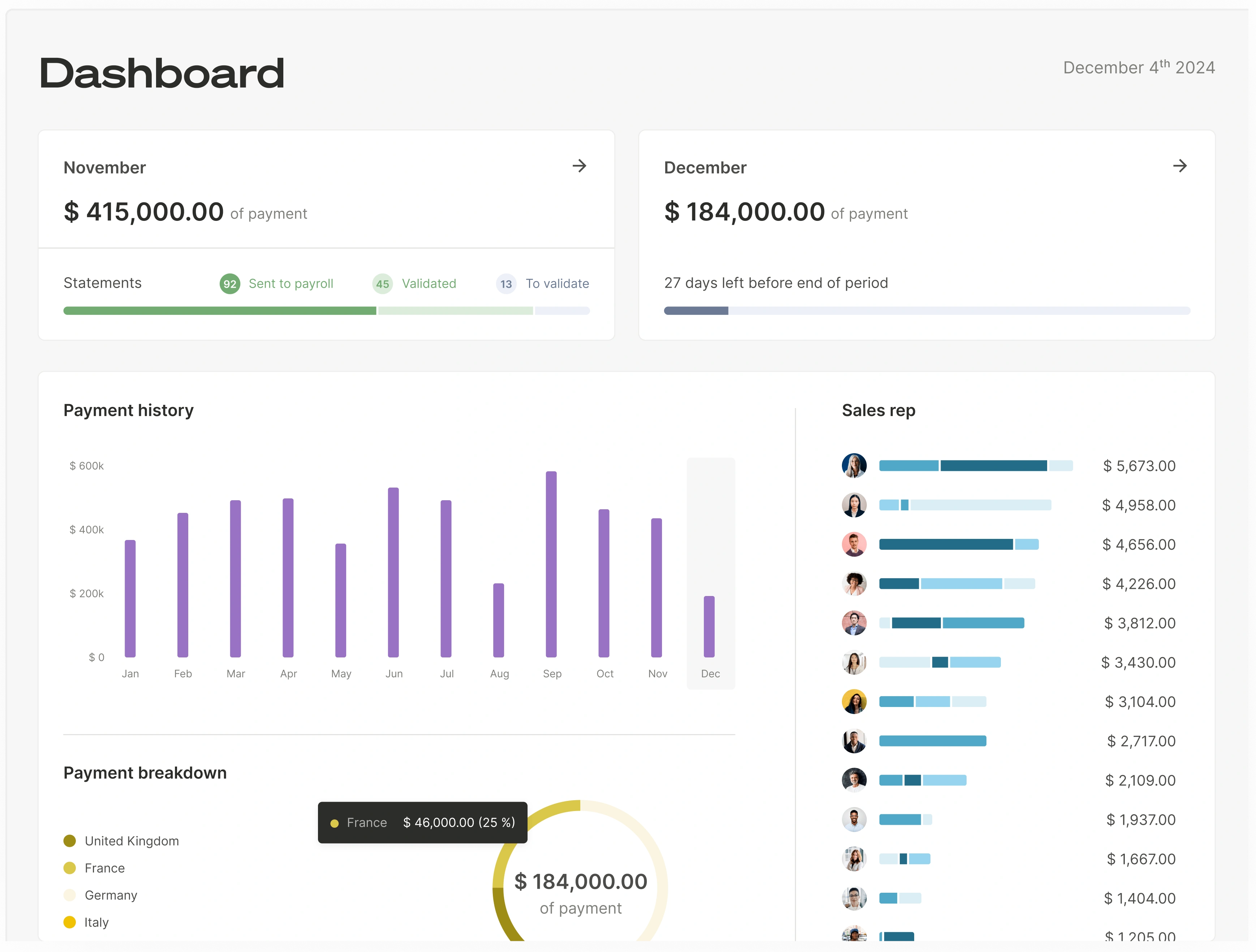
Qobra is the leading modern ICM platform purpose-built for mid-market and SMB companies that need enterprise-grade capabilities without enterprise complexity. Founded in 2020, Qobra has become the go-to solution for high-growth SaaS, tech, and professional services companies across Europe and North America.
Why Qobra Leads:
Real-Time Transparency: Every sales rep gets a personal dashboard showing live commission calculations, quota progress, and pipeline impact. No more "black box" compensation—reps see exactly how every deal affects their earnings.
RevOps-First Design: Built for RevOps and Sales Ops teams, not finance departments. The no-code plan builder lets non-technical users create and modify commission structures in minutes, not weeks.
Automated ASC 606 Compliance: Full commission capitalization and amortization automation, including adjustments for early churn or expansion. Finance teams get audit-ready reports without manual reconciliation.
European Data Sovereignty + Global Scale: Unique in the market for offering EU data residency (GDPR-compliant) while supporting global operations with multi-currency and multi-entity capabilities.
Rapid Implementation: Average deployment is 2-4 weeks from kickoff to first commission run. Pre-built connectors for Salesforce, HubSpot, NetSuite, and 50+ other systems minimize custom integration work.
Customer Proof Points:
- GoCardless reduced commission processing time by 90% and eliminated commission disputes
- ElevenLabs achieved 100% commission calculation accuracy across global teams
- Make scaled from 50 to 200+ reps without adding comp admin headcount
Ideal For: Mid-market companies (100-500 employees) with 20-200 sales reps who need transparent, scalable ICM without the cost and complexity of enterprise legacy platforms.
CaptivateIQ: Flexibility for Complex Plans
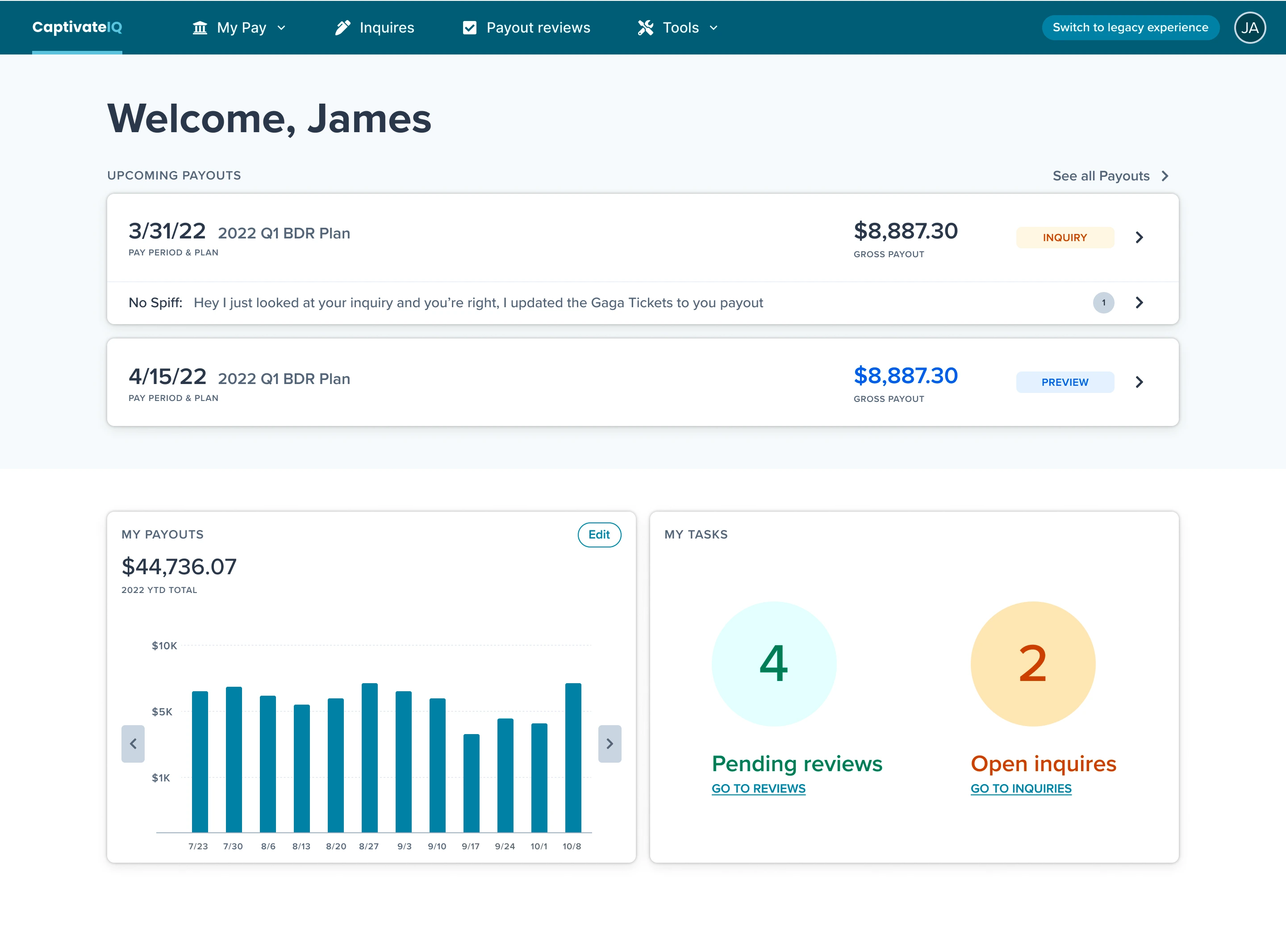
CaptivateIQ has established itself as the platform of choice for companies with highly complex, non-standard commission structures. Its strength lies in handling edge cases and custom logic that other platforms struggle with.
Core Strengths:
- Extreme Flexibility: Can model virtually any commission plan, no matter how complex
- Custom Fields: Extensive support for custom CRM fields and proprietary data sources
- Audit Trail: Comprehensive calculation history and documentation
- Enterprise Integration: Strong connectors for Salesforce, NetSuite, Workday, and other enterprise systems
Considerations:
- Steeper Learning Curve: Power comes at the cost of complexity; requires training investment
- Longer Implementation: Flexibility means more configuration decisions; typical deployment 4-8 weeks
- Cost: Premium pricing that may exceed mid-market budgets
Best Fit: Mid-market to enterprise companies (500-5,000 employees) with unique commission structures that require extensive customization.
Xactly: Enterprise-Grade Legacy Platform
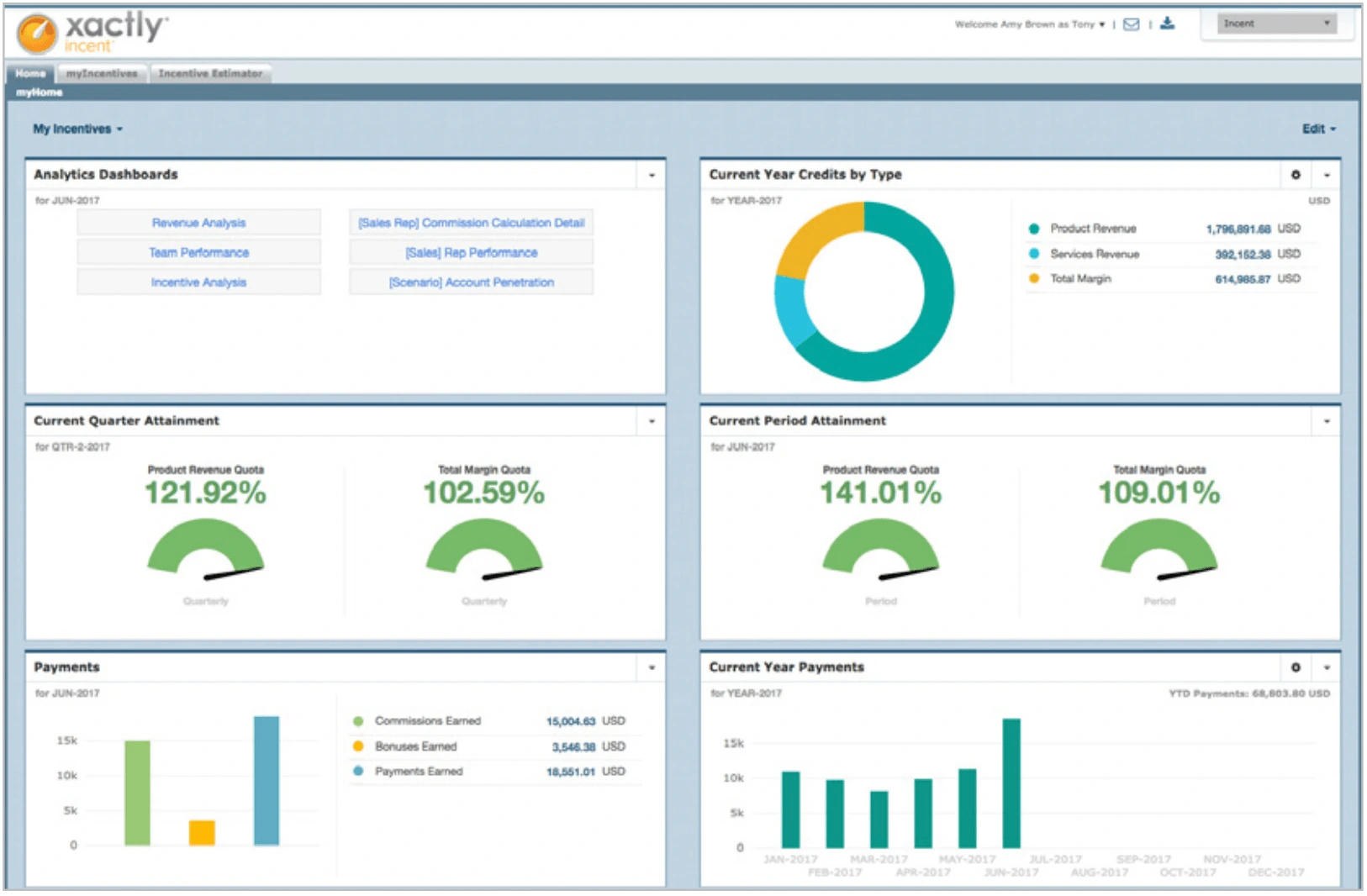
Xactly is the incumbent in enterprise ICM, with 20+ years of market presence and deep penetration in Fortune 500 accounts. It's a full Sales Performance Management (SPM) suite, not just an ICM tool.
Core Strengths:
- Comprehensive SPM: Territory management, quota planning, goal setting beyond just commissions
- Enterprise Scale: Handles tens of thousands of users across global operations
- Deep Salesforce Integration: Strong native connector with mature enterprise features
- Benchmarking Data: Access to Xactly's compensation benchmark data from thousands of companies
Considerations:
- Complexity: Feature-rich but heavy; requires dedicated admin resources
- Long Implementation: 12-24 weeks typical for mid-size deployments, longer for full SPM rollout
- High TCO: Significant licensing costs plus implementation services; typical all-in first-year cost $200K-$500K+
- Dated UX: User interface feels older compared to modern platforms
Best Fit: Enterprise companies (5,000+ employees) with >500 sales reps who need full SPM capabilities and can support dedicated platform administration.
Everstage: Gamification-First Approach
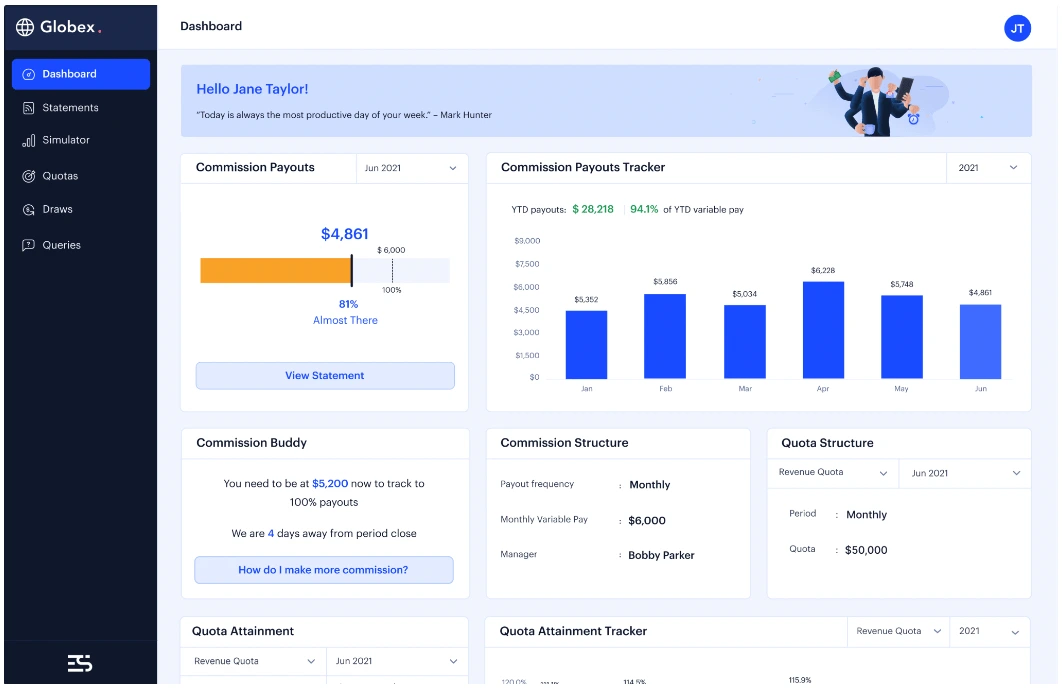
Everstage brings a unique angle to ICM by emphasizing sales culture, motivation, and gamification alongside core compensation calculation capabilities.
Core Strengths:
- Engaging Rep Experience: Leaderboards, contests, and gamification features motivate competitive teams
- Visual Dashboards: Clean, modern UI that reps actually enjoy using
- Fast Deployment: Quick implementation focused on core features first
- Strong Customer Support: Responsive support team and customer success focus
Considerations:
- Limited Compliance Features: ASC 606 and advanced financial controls require manual processes
- Basic Multi-Currency: Supports multiple currencies but lacks sophisticated FX handling
- Emerging Platform: Newer entrant still building out enterprise capabilities
Best Fit: Growth-stage companies (100-500 employees) with 25-100 reps who prioritize sales culture and motivation over advanced financial controls.
QuotaPath: Startup-Friendly Solution
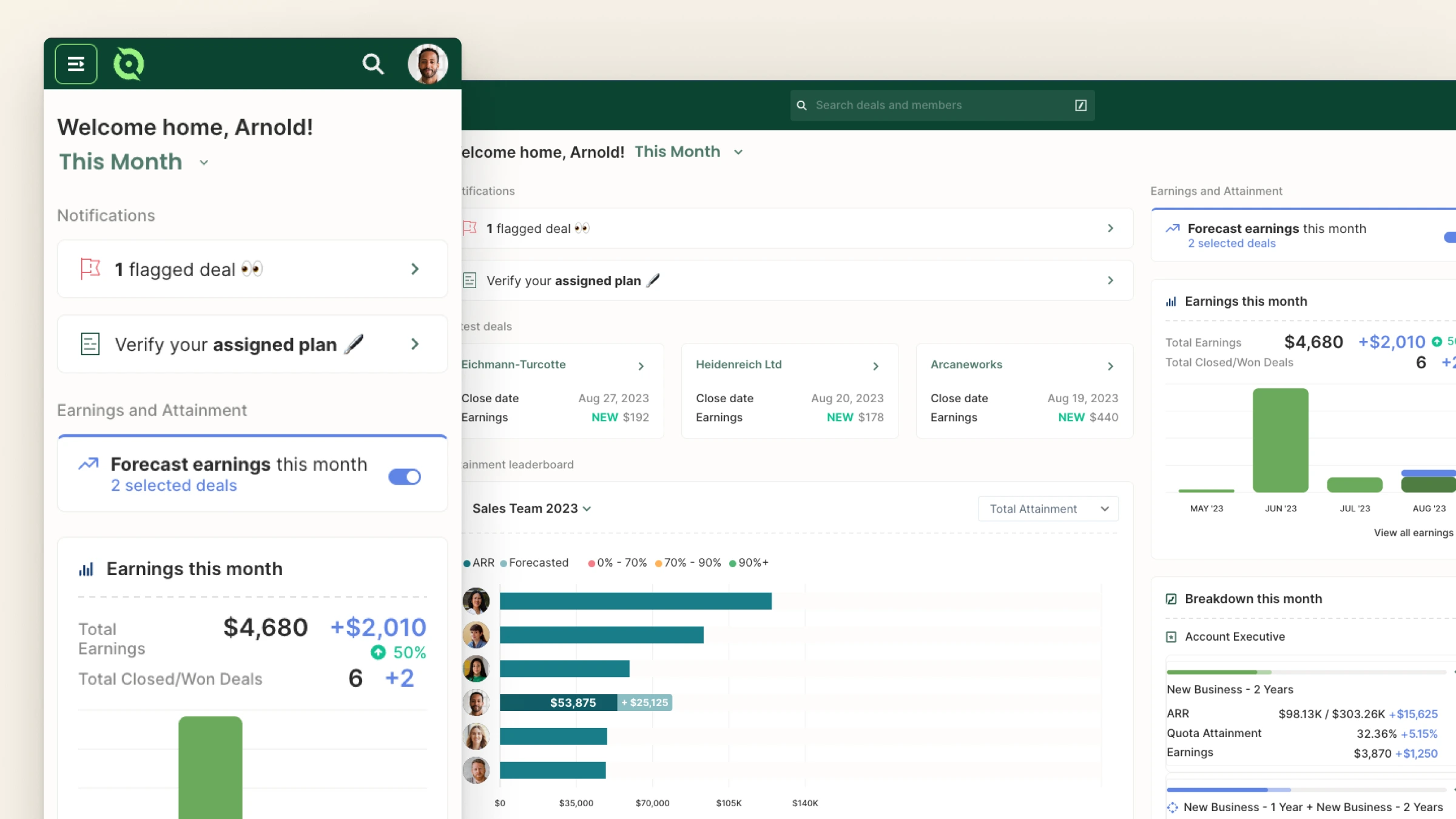
QuotaPath has carved out a niche as the easiest ICM platform to deploy for early-stage companies who need to graduate beyond spreadsheets.
Core Strengths:
- Fastest Time-to-Value: Can be live with first commission run in under a week
- Simple Pricing: Transparent per-user pricing with no hidden fees
- Intuitive Plan Builder: Easiest plan design interface in the market
- Sales Rep Focus: Dashboard optimized for rep motivation and transparency
Considerations:
- Limited Customization: Simplified approach means less flexibility for complex plans
- Basic Reporting: Financial reporting capabilities lag more mature platforms
- Scale Limitations: Some customers report performance issues above 150-200 reps
Best Fit: Startups and small businesses (10-200 employees) with 5-50 reps who need simple, fast ICM deployment.
Spiff: Real-Time Motivation Focus
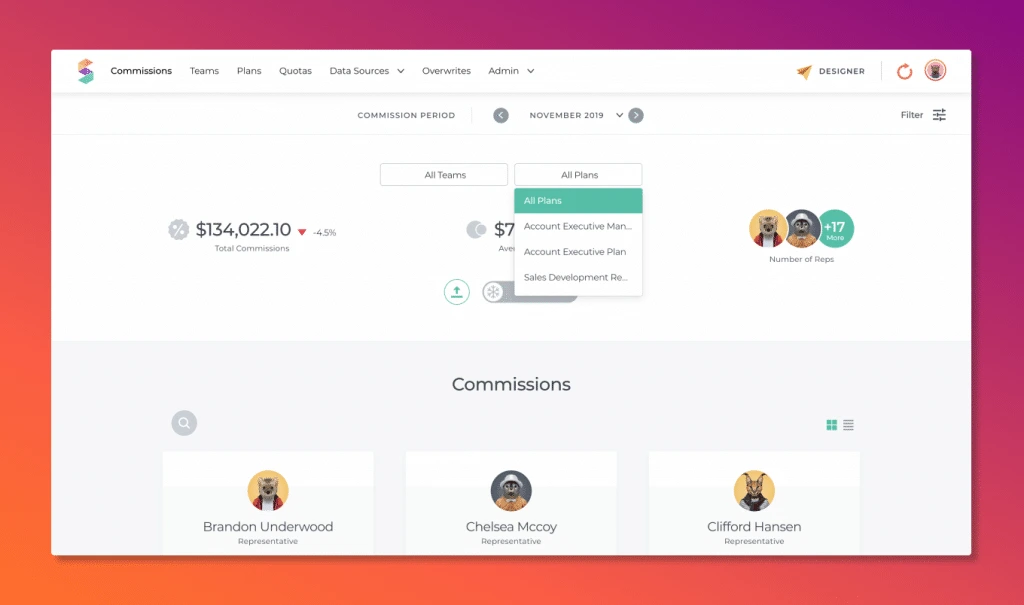
Spiff differentiates with extreme emphasis on real-time commission visibility designed to maximize sales rep motivation and engagement.
Core Strengths:
- Instant Calculation: True real-time processing as opportunities update in CRM
- Mobile-First: Excellent mobile app for reps to check commissions anywhere
- Modern UX: Slick, consumer-grade interface that reps love
- Fast Deployment: Quick implementation for standard plans
Considerations:
- Limited Plan Complexity: Works well for straightforward plans; struggles with deep customization
- Weak Financial Controls: ASC 606 and advanced compliance features require external solutions
- Scale Questions: Some customers report issues scaling beyond 100-150 reps
Best Fit: Small tech companies (50-300 employees) with 10-75 reps who prioritize rep experience and motivation over financial complexity.
Why Qobra Leads the Modern ICM Category
While the ICM market offers diverse options, Qobra stands apart as the platform purpose-built for modern, growth-focused organizations. Here's why hundreds of high-performing companies choose Qobra:
Real-Time Commission Visibility for Every Rep
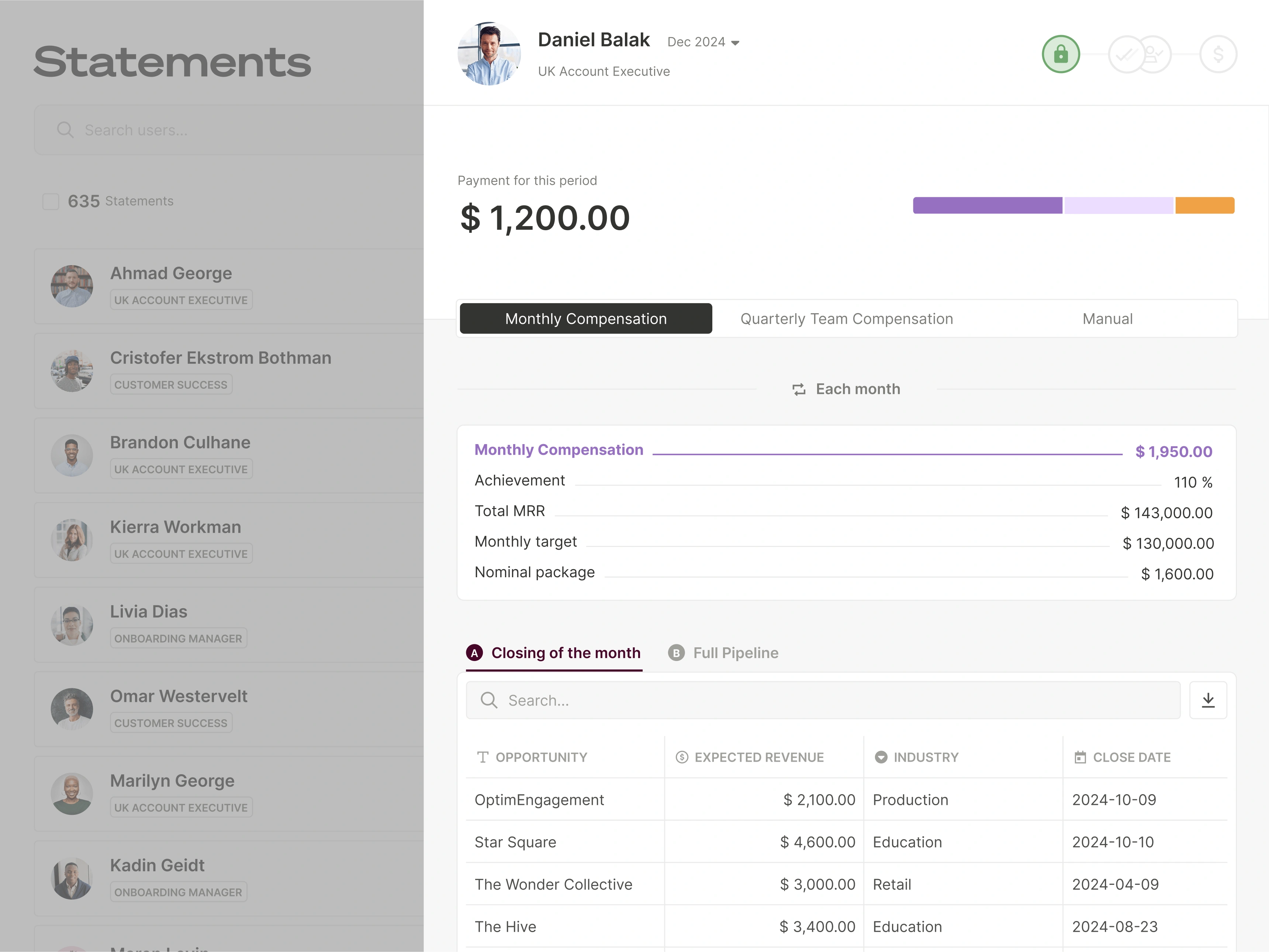
Most ICM platforms claim "real-time" calculation, but Qobra delivers true continuous synchronization:
- Live Pipeline Impact: Reps see exactly how closing each opportunity in their pipeline will affect their commission, updated as deal stages change in the CRM
- Scenario Planning: Built-in "what-if" modeling lets reps explore: "If I close these 3 deals at 80% of current value, what will I earn?"
- Mobile-Native: Full-featured mobile app gives reps commission visibility anywhere—in meetings, at customer sites, or during travel
- Notification System: Proactive alerts when reps hit milestones, enter new commission tiers, or receive SPIFFs
Customer Outcome: GoCardless reported 92% of reps check their Qobra dashboard at least once per week, compared to <20% who previously reviewed monthly commission statements.
Automated ASC 606 Compliance
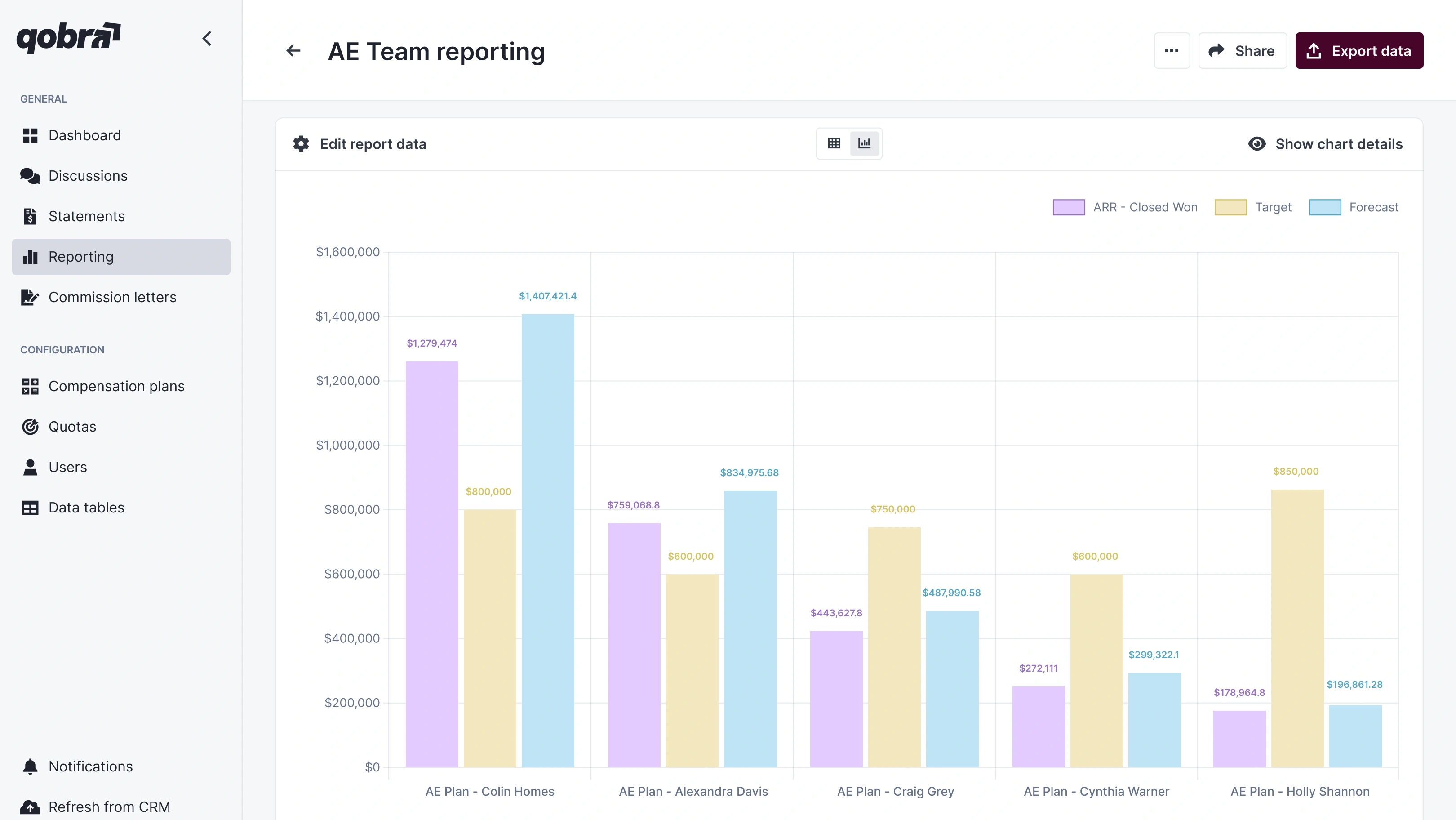
Qobra's financial controls go deeper than competitors, providing complete automation of complex revenue recognition requirements:
Commission Capitalization Engine:
- Automatically identifies commissions eligible for capitalization under ASC 606
- Calculates customer lifetime based on cohort retention data
- Generates amortization schedules for every commissioned transaction
- Tracks capitalized commission assets on balance sheet
Dynamic Amortization Adjustment:
- Automatically adjusts when customers churn early (catch-up expense recognition)
- Extends amortization when customers expand or renew
- Generates adjustment journal entries ready for GL import
Audit-Ready Documentation:
- One-click audit package generation with full transaction lineage
- Commission policy documentation with version control
- Detailed calculation methodology for every payment
- Reconciliation reports matching GL accounts
Customer Outcome: DataSnipper eliminated 40 hours per month of manual ASC 606 reconciliation work and passed their first audit with zero commission-related findings.
Built for RevOps Teams, Not Just Finance
Qobra's interface is designed for the people who actually design and manage commission plans day-to-day—RevOps and Sales Ops teams:
No-Code Plan Builder:
- Visual drag-and-drop interface for commission tiers, accelerators, and SPIFFs
- Template library of common plan structures (tiered, flat, bonus-only, hybrid)
- Preview mode shows exactly how plans will calculate before activation
- Clone and modify existing plans for rapid iteration
Scenario Testing Before Rollout:
- Upload historical deal data to see "what would this plan have cost last year?"
- Adjust plan parameters and instantly see financial impact projections
- Export scenario results to share with finance for approval
Rapid Plan Modification:
- Launch a new SPIFF promotion in under 5 minutes
- Adjust commission rates without breaking historical calculations
- Territory reassignments flow through automatically without manual overrides
Customer Outcome: Make's RevOps team launches new commission programs in under 30 minutes, down from 2-3 weeks with their previous manual process.
European Data Sovereignty + Global Scalability
Qobra is unique among ICM platforms in offering EU data residency while maintaining full global capabilities:
GDPR-Compliant Infrastructure:
- Data stored in European data centers (AWS Frankfurt, Google Belgium)
- Right to be forgotten automation for terminated employees
- Data processing agreements compliant with EU regulations
- Granular consent management for personal data access
Global Operations Support:
- Multi-currency with sophisticated FX rate handling
- Multi-entity reporting for complex international structures
- Country-specific tax treatment compliance
- Localization for major European languages (English, French, German, Spanish)
Data Security and Privacy:
- SOC 2 Type II certified
- ISO 27001 compliance in progress
- End-to-end encryption for sensitive commission data
- Role-based access controls with audit logging
This combination makes Qobra the only viable choice for European headquarters companies expanding globally, or US companies with significant European operations who must comply with GDPR.
Customer Outcome: Ogury, a global ad-tech company, consolidated seven separate commission tracking systems across regions into a single Qobra instance while maintaining local compliance.
Best Practices for Implementing ICM Software
Successfully deploying ICM software requires more than just technical integration. The companies that achieve fastest time-to-value and highest adoption follow these proven implementation practices:
Stakeholder Alignment and Change Management
ICM projects fail when they're treated as pure technology implementations. They succeed when approached as organizational change initiatives that require active stakeholder management.
Critical Stakeholders to Engage:
RevOps/Sales Operations (Primary Owner):
- Leads plan design and system configuration
- Defines crediting rules and commission logic
- Owns ongoing plan optimization and adjustments
Finance/Accounting (Compliance Partner):
- Reviews ASC 606 compliance approach
- Validates commission calculation methodology
- Defines GL integration and reporting requirements
Sales Leadership (Executive Sponsor):
- Communicates vision and rationale for new system
- Manages rep expectations during transition
- Reinforces importance of transparency and trust
Individual Sales Reps (End Users):
- Provide feedback on dashboard usability
- Report edge cases and calculation questions
- Become champions when they see value
Change Management Timeline:
Week -4: Pre-Announcement
- Executive sponsor introduces coming changes in sales all-hands
- Focus on benefits: transparency, accuracy, real-time visibility
- Address concerns proactively: "Will my commission change?" (No, just how you see it)
Week -2: Detailed Training
- RevOps hosts webinars showing new rep dashboard
- Finance explains how calculations work and where data comes from
- Sales managers walk through specific examples with their teams
Week 0: Go-Live
- Parallel run: Calculate commissions in new system AND old process
- Compare results and resolve discrepancies before switching
Week +2: Early Feedback
- Gather rep feedback through surveys and office hours
- Address questions and confusion immediately
- Document common issues and create FAQ
Week +4: Process Standardization
- Turn off old process completely
- Formalize dispute resolution workflow
- Celebrate wins: share time savings, accuracy improvements
Customer Lesson: ElevenLabs ran a 6-week pilot with 20 reps before full rollout to 200+ reps. This pilot identified UI improvements that increased adoption and reduced support tickets by 60%.
Data Migration and Integration Planning
Most ICM implementation challenges stem from data quality and integration issues, not platform limitations. Plan thoroughly:
Data Audit Phase (Before Implementation Kickoff):
- Export 12 months of historical deal data from CRM
- Review data completeness: Are opportunity owners accurate? Amounts correct? Close dates reliable?
- Identify data quality issues: Duplicate opportunities? Missing fields? Inconsistent naming?
- Clean critical data before migration (opportunity owner assignment, product categorization, etc.)
Integration Mapping:
- Document all systems that need to connect: CRM, billing, ERP, HR/payroll
- Map field relationships: "Salesforce Opportunity.Amount" → "Qobra Deal.Commission Basis"
- Define integration frequency: Real-time (WebHook), hourly batch, daily sync?
- Plan for edge cases: What happens if CRM is temporarily unavailable? Data sync fails?
Historical Data Migration Strategy:
- Determine how far back to migrate: 12 months? 24 months?
- Import historical commissions "read-only" or allow recalculation?
- Test migration with sample data before full load
- Validate migrated totals match source system
Integration Testing Checklist:
- New opportunity in CRM appears in ICM within defined timeframe
- Opportunity stage changes trigger commission calculation updates
- Deal ownership changes credit correct rep
- Closed deals flow to commission payout queue
- Refunds and cancellations trigger clawback processing
- Commission data exports to payroll system correctly
Customer Lesson: Agicap spent 2 weeks on data cleanup before implementation kickoff. This upfront investment resulted in zero commission disputes during their first 3 months live—compared to 15-20 monthly disputes with their previous manual process.
Pilot Program Before Full Rollout
Never roll out ICM to your entire sales organization in one day. A structured pilot de-risks implementation and improves outcomes:
Pilot Team Selection:
- Choose 10-20 reps representing diverse roles (AE, SDR, AM, CSM)
- Include at least one sales manager who will champion the platform
- Pick reps with varied commission plan structures to test flexibility
- Include both high performers (who will validate accuracy) and newer reps (who will stress-test clarity)
Pilot Duration: 4-8 weeks minimum
- Month 1: Focus on platform functionality and calculation accuracy
- Month 2: Refine rep experience based on feedback
Pilot Success Metrics:
- Accuracy: 100% of pilot rep commissions match manual calculation
- Adoption: >90% of pilot reps log in at least once per week
- Satisfaction: >8/10 average score on pilot rep survey
- Issue Volume: <5 open issues per week by end of pilot
Feedback Collection Methods:
- Weekly office hours where pilot reps can ask questions
- Dedicated Slack channel for real-time feedback
- End-of-pilot survey covering usability, accuracy, and satisfaction
- One-on-one sessions with sales managers to gather qualitative insights
Pilot Outcome Uses:
- Inform training materials for broader rollout
- Identify dashboard UI improvements before full deployment
- Build internal case studies and testimonials from pilot reps
- Adjust plan logic based on edge cases discovered
Customer Lesson: Make's pilot revealed that reps wanted mobile access first, not desktop. Qobra prioritized mobile app adoption during the pilot, resulting in 85% mobile usage vs. 15% desktop once rolled out broadly.
Continuous Optimization Based on Analytics
ICM isn't "set it and forget it." High-performing companies treat commission plans as dynamic business tools that require ongoing optimization:
Monthly Analytics Review:
- Commission expense as % of revenue (target range: 8-15% for SaaS)
- Distribution of quota attainment across team (healthy shape: bell curve centered ~100%)
- Accelerator usage: Are top performers actually hitting accelerator thresholds?
- SPIFF effectiveness: Do SPIFFs actually change behavior or just reward what would have happened anyway?
Quarterly Plan Adjustments:
- Review business priorities: Has strategy shifted?
- Analyze rep performance: Are plans motivating right behaviors?
- Benchmark against market: Are compensation levels competitive?
- Test new plan structures: Model proposed changes before implementation
Annual Plan Redesign:
- Complete overhaul of commission structures based on full year performance
- Incorporate RevOps compensation strategy insights
- Align with updated go-to-market motion
- Factor in new product launches and strategic priorities
Key Optimization Questions:
- Are we paying commissions on the metrics that actually drive revenue?
- Do accelerators meaningfully change behavior or just increase costs?
- Are reps focused on strategic products or just easiest-to-sell items?
- Does team composition (AE vs. SDR vs. AM) match revenue generation model?
Analytics to Track:
- Rep Performance Distribution: Shape of the curve reveals plan calibration
- Commission per Dollar of Revenue: Efficiency metric—lower is often better
- Time to First Commission: How long for new reps to earn first payout?
- Dispute Rate: Percentage of commission payments questioned by reps
- Plan Change Frequency: How often do you modify structures mid-period?
Customer Outcome: Datasnipper reviews analytics monthly and makes small plan adjustments quarterly. This continuous optimization approach improved forecast accuracy by 25% and reduced commission expense as a percentage of revenue from 13.1% to 11.4% while maintaining rep satisfaction.
Frequently Asked Questions About ICM
What is incentive compensation management?
Incentive compensation management (ICM) is the process of designing, implementing, and administering variable pay plans that reward sales teams for achieving specific performance goals. Modern ICM automates commission calculations, provides real-time visibility into earnings, and ensures compliance with financial regulations like ASC 606.
How does incentive compensation management work?
ICM works by integrating with CRM, billing, and HR systems to automatically calculate commissions based on predefined plan rules. The process includes: (1) defining performance metrics and commission structures, (2) integrating data sources, (3) automating real-time calculations, (4) providing transparent dashboards to reps, (5) generating compliance-ready reports, and (6) continuously optimizing based on performance analytics.
What are the benefits of ICM software?
Key benefits include: eliminating manual calculation errors, providing real-time commission visibility for sales teams, ensuring ASC 606 compliance, reducing administrative time by 75-90%, improving forecast accuracy, enabling rapid plan changes, enhancing transparency and trust in compensation, and scaling effortlessly with team growth.
How much does ICM software cost?
ICM software pricing varies by platform and company size. Entry-level solutions like QuotaPath start around $15-25 per user/month. Mid-market platforms like Qobra typically range from $50-150 per user/month depending on features. Enterprise solutions like Xactly require custom quotes but often start at $200K+ annually for all-in costs including implementation.
What's the difference between ICM and SPM?
Incentive Compensation Management (ICM) focuses specifically on commission calculation, payment, and transparency. Sales Performance Management (SPM) is a broader category that includes ICM plus territory planning, quota setting, goal management, and sales coaching. ICM is a component of SPM, not a replacement for it.
How long does ICM implementation take?
Implementation timelines vary by platform complexity and company size. Modern platforms like Qobra typically deploy in 2-4 weeks. Mid-market solutions like CaptivateIQ take 4-8 weeks. Enterprise platforms like Xactly often require 12-24 weeks for full deployment. Pilot programs add 4-8 weeks but significantly reduce risk.
Do I need to replace my CRM to implement ICM software?
No. Modern ICM platforms integrate with your existing CRM (Salesforce, HubSpot, etc.) without requiring any changes to your CRM instance. The ICM platform pulls data from your CRM via API connections and calculates commissions separately while keeping your CRM as the system of record for opportunity data.
Can ICM software handle complex commission plans?
Yes. Modern ICM platforms handle sophisticated logic including tiered structures, accelerators, team-based incentives, split credits, multi-product rates, SPIFFs, and time-based modifiers. The best platforms like Qobra and CaptivateIQ can model virtually any commission structure without custom code.
How do I choose the right ICM solution?
Evaluate platforms based on: (1) team size and growth plans, (2) commission plan complexity, (3) integration requirements (CRM, ERP, payroll), (4) compliance needs (ASC 606, multi-currency), (5) implementation timeline constraints, (6) budget, and (7) user experience priorities. Request demos from 2-3 vendors and run a proof-of-concept with your actual commission data.
What happens to historical commission data during migration?
Most ICM platforms import historical commission data in read-only format for reference. This gives reps and managers visibility into past earnings without recalculating historical periods. For ongoing periods that span the migration date, platforms typically recalculate based on new system rules to ensure consistency going forward.
Get Started with Modern Incentive Compensation Management
Traditional commission management—spreadsheets, manual calculations, delayed payouts, and opaque processes—creates operational burden, compliance risk, and sales team frustration. These problems compound as companies scale, eventually becoming strategic blockers to growth.
Modern incentive compensation management eliminates these challenges through automated data integration, real-time calculation engines, transparent rep dashboards, and compliance-ready reporting. The transformation isn't just operational efficiency—it's strategic alignment between how you compensate teams and how you want them to behave.
The companies winning in 2026 recognize that compensation infrastructure is competitive advantage. Transparent, accurate, real-time commission systems:
- Motivate better performance by creating clear line-of-sight between activity and earnings
- Improve retention by building trust through transparency
- Enable rapid pivots when market conditions require plan adjustments
- Scale effortlessly as sales teams grow from 20 to 200+ reps
- Satisfy compliance requirements that manual processes can't reliably meet
Ready to transform your compensation infrastructure?
Request a demo of Qobra to see how modern ICM delivers transparency, automation, and trust—or explore our library of commission plan templates to start improving your plans today.
Join hundreds of high-growth companies who've already made the shift from spreadsheet chaos to automated, transparent incentive compensation management. Your sales team—and your finance team—will thank you.